
Your Texas electricity bill comes down to two big things: your usage and the delivery cost to your home. Add a few small fees and taxes on top, and that’s your bill. We break it down in plain English, so you know what you’re paying for, and which parts you control.
What are the 2 Main Parts of a Texas Electricity Bill?
In Texas’s deregulated market, two different companies show up on your bill. Your retail electric provider (REP) sells you the actual electricity. This is the company you signed up with, like Pogo. Your transmission and distribution utility (TDU, or sometimes TDSP) owns the wires and delivers electricity to your meter. Examples are Oncor, CenterPoint, AEP Texas, or Texas-New Mexico Power. You choose your REP. Where you live determines your TDU. Roughly speaking, energy charges make up a little over half of a typical bill and delivery charges about a third. Fees and taxes round out the rest.

What is the Energy Charge?
This is the part most people think of as “the rate.” It’s billed per kilowatt-hour (kWh): one kWh is the energy it takes to run a 1,000-watt appliance for an hour. If your plan is 12 cents/kWh and you use 1,000 kWh in a month, your energy charge is approximately $120. This is the only truly shoppable piece of your bill. Your REP sets your rate, and it’s what changes when you switch plans or providers. Some plans also add a fixed monthly “base charge” no matter how much you use. So, be sure to read the fine print.
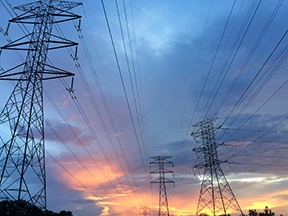
What are TDU Delivery Charges, and Why can’t I Shop for Them?
TDU delivery charges cover moving electricity across the power lines and maintaining the grid in your area. They usually have two pieces: a fixed monthly charge (often around $4–$5) and a per-kWh charge that rises with your usage. Here’s the key thing: the Public Utility Commission of Texas (PUCT) regulates these rates and, are identical for every customer in your utility’s territory, no matter which REP you use. The PUCT typically updates them twice a year (around March and September), which is a common reason a bill can jump even when your rate hasn’t changed. Because they’re regulated, no provider can discount them, so be skeptical of any offer that claims to.
What Other Taxes and Fees Show Up?
Beyond energy and delivery, you’ll usually see a small PUCT assessment (a fraction of a cent per kWh that funds the commission) and sales tax. Residential electricity is exempt from the 6.25% Texas state sales tax, but some local (city or special-district) sales taxes may still apply depending on where you live, up to about 2%. These items are typically a small slice of the total, but they’re why your final number lands a little higher than energy plus delivery alone.
How do I Read my Electricity Facts Label (EFL)?
Every Texas plan comes with an Electricity Facts Label: a one-page, standardized disclosure your provider must give you before you enroll. It shows the average price per kWh at three usage levels (500, 1,000, and 2,000 kWh) so you can compare plans apples-to-apples. Because delivery charges are “fixed plus usage,” your average price per kWh usually looks lower the more you use. If your household runs high in the summer (very common in Texas, where homes often use well above the national average), look at the 2,000 kWh column, not just the headline rate.

Why does my Bill Change from Month to Month?
Three big reasons your electric cost changes every month:
- How much electricity you used (Texas summers push AC usage way up),
- those twice-a-year TDU rate updates,
- and whether your plan has tiered pricing or bill credits tied to specific usage levels.
If you’re on a prepaid or pay-as-you-go electric plan, you see your usage and spending update daily instead of getting one big surprise at month’s end. That makes it easier to catch a spike, like a struggling AC unit, before it balloons.
Frequently Asked Questions
A: A TDU delivery charge is the fee your local utility, aka TDU (Oncor, CenterPoint, AEP Texas, or Texas-New Mexico Power), charges to deliver electricity to your home. The PUCT regulates TDU delivery charges and is identical for everyone who resides in the same TDU service area. The TDU delivery charge can not be discounted by any REP (Retail Electric Provider).
A: Your retail electric provider (REP) is the company you buy electricity from and can switch anytime. Your TDU is the utility that owns the wires and delivers the power based on your location. You can’t choose your TDU because your address determines it, and only one TDU serves an area. You can choose your REP, like Pogo Energy.
A: Cooling is the single biggest driver of home energy use for Texas households, especially during the summer months when temperatures are triple digits in some areas. Along with the increase in usage, the per-kWh delivery charges rise with usage. This means that a hot month raises both the energy and the delivery portions of your bill. This means that you end up paying more to keep the power on during the summer, and there is little you can do about it other than limiting your usage as much as possible.
A: No, Texas residents cannot negotiate their utility’s regulated delivery rates. These rates are approved by the Public Utility Commission of Texas. Switching electricity providers does not change the underlying delivery rates for the same home.
A: The average Texas home uses about 1,100 kilowatt-hours (kWh) of electricity per month. According to the U.S. Energy Information Administration’s 2024 data, Texas residential customers averaged 1,096 kWh monthly or 36 kWh per day. This statewide average includes apartments and other residential housing types such as condos, homes built on slab foundations, and homes built on pier-and-beam foundations.
Your actual usage depends on your home’s size, insulation (energy efficiency of home windows and doors), number of occupants, appliance energy efficiency and usage, and heating and cooling needs. Both the outside temperature and the humidity in your home affect how long air conditioners run and your energy bill.
To get a better idea of how much electricity your household uses, add the kWh used on your last 12 electricity bills and divide by 12.