
When the Texas heat shows up, your air conditioner becomes the MVP of the house. But it can also become the biggest reason your electricity usage starts climbing. Keeping cool comes at a cost, but what costs more: central Air conditioning or a room air conditioner?
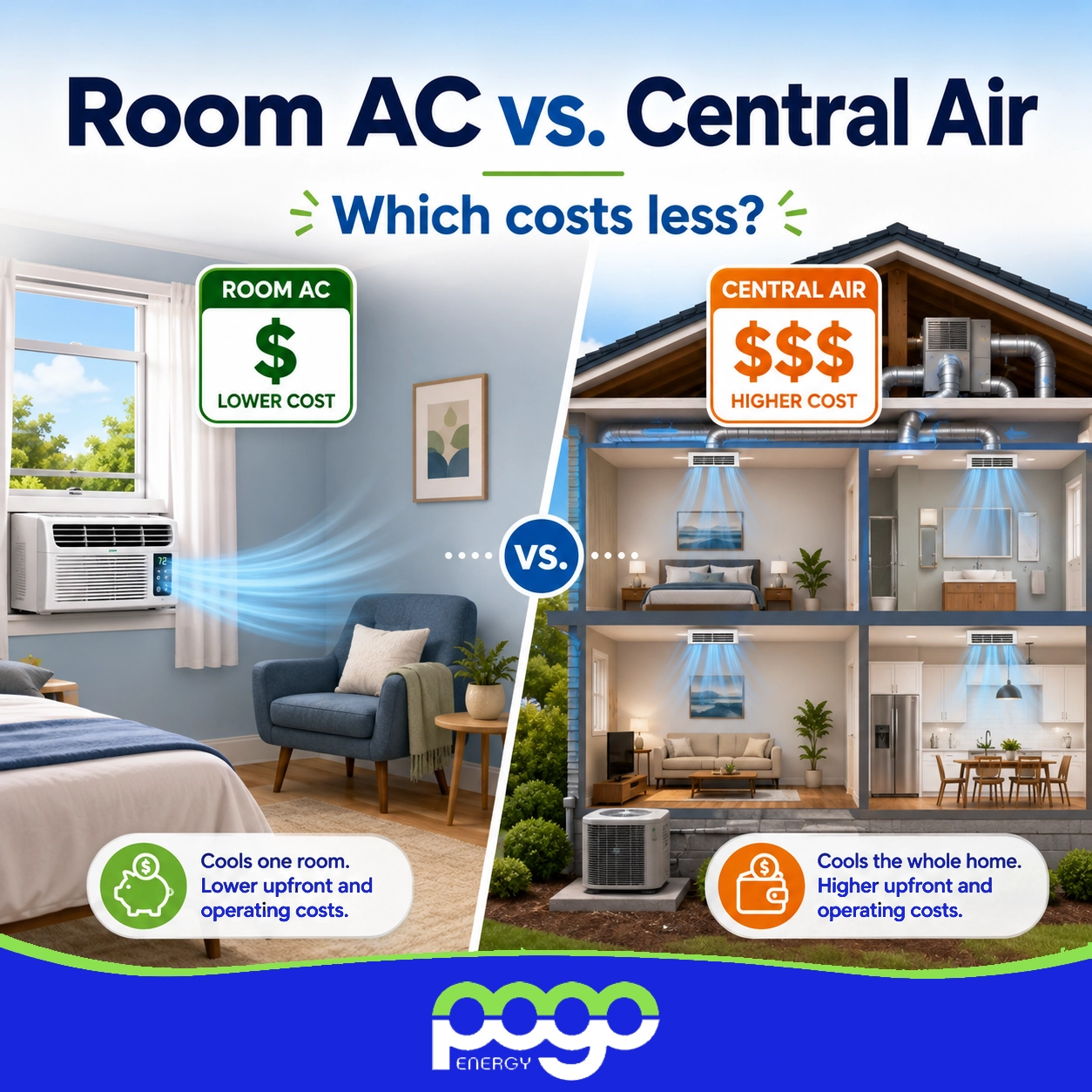
What costs less: a room air conditioner or central air conditioning?
The answer is: it depends.
If you only need to cool one bedroom, a home office, or a small apartment, a room air conditioner can cost less to buy, install, and run. But if you’re trying to cool your whole home every day and night, central air may be a better, more cost-efficient choice because it is designed to cool larger spaces. The U.S. Department of Energy notes that central air conditioners are generally more efficient than room air conditioners, though an AC in an average-sized home can still use more than 2,000 kWh of electricity per year.
When a Room Air Conditioner Costs Less
A room air conditioner, like a window unit or portable AC, usually costs less up front than a central air conditioner. You don’t need ductwork, a full HVAC installation, or a major home project. You plug it in, cool the room, and go on with your day.
A room AC may be the cheaper choice when:
- You only need to cool one room.
- You spend most of your time in one area of the home.
- You rent and cannot install central air.
- Your home does not have ductwork.
- You want to avoid cooling empty rooms.
This is called spot cooling, and it can be a smart way to reduce your electric usage. Why pay to cool the kitchen, hallway, guest room, and laundry room if you’re only hanging out in the bedroom?
Just make sure the room AC is the right size. According to the Department of Energy, oversized room air conditioners can cost more to buy and may use more energy because they cycle on and off too often. They may also do a worse job removing humidity, and if you recall, humidity does affect your electric bill.
When Central Air May Be the Better Deal
Central air conditioning costs more upfront, but it can make more sense if you’re cooling an entire home. It is quieter, more convenient, and better for whole-home comfort.
Central AC may be the better choice when:
- You need to cool most or all of the house.
- Multiple people are home in different rooms.
- Your home already has ductwork.
- You want even cooling throughout the house.
- You use AC heavily during the hot Texas months.
The catch? Central air can use a lot of electricity if you run it constantly, set the thermostat too low, or cool rooms you aren’t using. Also consider installing a smart thermostat. A smart thermostat can greatly reduce your energy use and increase your savings. That’s where the real savings come in: not just what kind of AC you use, but how you use it.
How to Make Either Option Cost Less
Whether you use a window unit, portable AC, or central air, a few habits can help lower your electricity usage.
- Start by setting the temperature a little higher when you can. Even a few degrees can make a difference during peak heat.
- Close blinds and curtains during the hottest part of the day.
- Use ceiling fans to help the room feel cooler.
- Clean or replace filters regularly.
- Seal gaps around windows and doors.
- Turn off room ACs when you leave.
- Avoid cooling rooms you are not using.
If you’re buying a new room AC, look for the ENERGY STAR label. ENERGY STAR says many certified room air conditioners include variable-speed technology that can save energy and keep rooms cooler more quietly.
AC Questions Answered
Is it cheaper to run a window AC unit or central air?
It depends on how much space you need to cool. A room air conditioner typically costs less to buy, install, and run when cooling one room, while central air can be more cost-efficient when cooling an entire home.
What is spot cooling and can it save money?
Spot cooling means using a room air conditioner to cool only the space you are actually using, rather than the whole home. It can reduce electricity usage by avoiding the cost of cooling empty rooms like hallways, guest rooms, or the laundry room.
Does the size of a room AC unit affect energy costs?
Yes, an oversized room air conditioner can cost more to buy and may use more energy because it cycles on and off too frequently. It may also do a worse job removing humidity, which can further affect your comfort and electricity usage.
When does central air make more financial sense than a window unit?
Central air tends to be the better choice when you need to cool most or all of your home, multiple people are in different rooms, or your home already has ductwork in place.
What are some simple ways to lower AC costs regardless of system type?
Setting the thermostat a few degrees higher, closing blinds during peak heat, using ceiling fans, cleaning filters regularly, and turning off room ACs when leaving a room can all help reduce electricity usage.
What should I look for when buying a new room air conditioner?
Look for the ENERGY STAR label, as many certified room air conditioners include variable-speed technology that can save energy and cool rooms more quietly.
How much electricity does central air use in an average home?
According to the U.S. Department of Energy, an AC in an average-sized home can use more than 2,000 kWh of electricity per year.
What is the most expensive AC mistake homeowners make?
Cooling more space than you actually need is often the most expensive mistake. Asking whether you need the whole house cooled or just one room can help you avoid wasting electricity and unexpected spikes in your usage.
So Which One Costs Less
Here’s the simple version:
So before you crank the AC, ask yourself: do I need the whole house cold, or just the room I’m in? Room air conditioners usually cost less when cooling one room or a small area. Central air can be more efficient when cooling the whole home. The most expensive option is often cooling more space than you actually need.
That one question can help you avoid wasting electricity and avoid a surprise when you check your usage.
Stay in Control with Pogo Energy
At Pogo Energy, we’re all about helping Texans stay in control of their electricity. With pay-as-you-go electricity, daily text or email updates help keep you informed about your usage and account balance. Pogo Energy also offers no-deposit, no-credit-check electricity plans for eligible Texas residents and small businesses in deregulated areas.
Because nobody likes Bill Shock.
When you know how much energy you’re using, it’s easier to make smarter choices — like deciding whether to run the central AC or just cool the room you’re actually using.
Ready for electricity without the B.S.? Check your rate with Pogo Energy today.