
A big question Texans are asking is: Where do data centers get all their power, and how does that impact grid reliability and resources, like water?
Texas data centers get power one of two ways: plug into the ERCOT grid, or build their own power plant on site, usually natural gas. Building their own eases the competition for your electricity. Water is the uniquely Texas concern, sitting right at the energy-and-drought intersection, especially over the already-stressed Ogallala Aquifer in the Panhandle. And thanks to Senate Bill 6, a flexible data center can actually make the grid more reliable during emergencies. Plot twist. (Jobs, noise, revenue, and local impact matter too, but those belong to a broader conversation we’re deliberately saving for another day.)
Key takeaways
- Texas data centers either connect to the grid or build their own on-site gas power.
- On-site power eases grid competition, though it raises other questions we’re covering separately.
- Under Senate Bill 6, flexible data centers can act as an emergency backstop for the grid.
- Water is the uniquely Texas energy-and-drought concern, especially over the Ogallala Aquifer.
- Jobs, revenue, noise, and neighborhood impact are real, but they belong to a broader conversation.
How do data centers get their power?
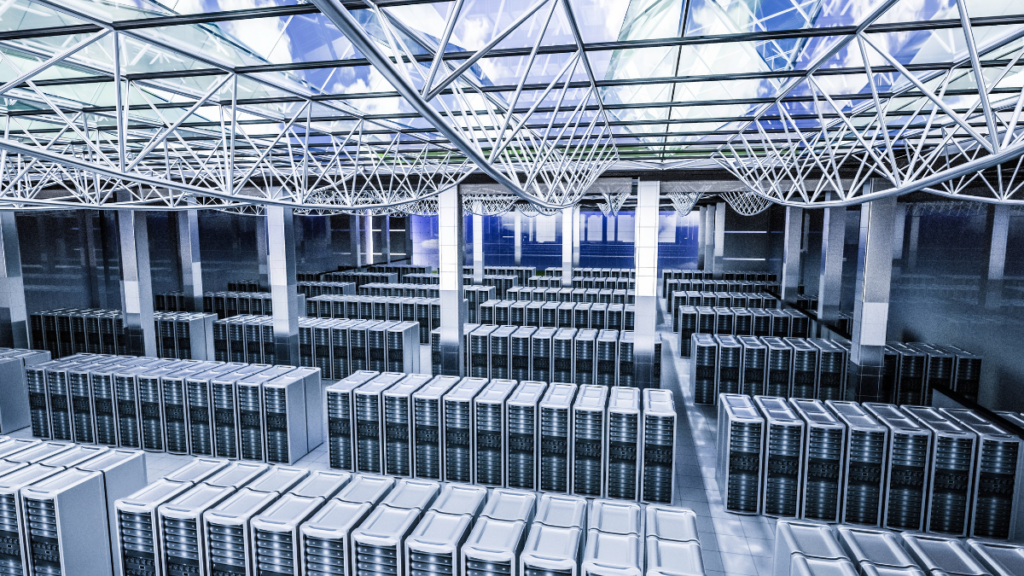
Two basic models, and the difference is a big deal.
Model one is simple: the data center connects to the ERCOT grid and buys power like any other customer, just at a comically large scale. This is the one that makes people ask whether they’re competing with your house for electricity.
Model two is newer and increasingly popular in Texas: “behind-the-meter” power, where the developer builds its own power plant right next door, usually natural gas, often paired with giant batteries for “bridge power” while the plant gets built. Amazon and Fermi America have floated multi-gigawatt gas projects to run their Texas campuses directly, and Governor Abbott has told some projects to make their own electricity rather than raid the grid.
Does the data center drain the power I use at home?
Here’s the honest answer. A data center running on its own on-site gas plant is not fighting your air conditioner for the same electricity, and that’s a genuine relief. But building your own power doesn’t make the trade-off vanish; it just relocates it. Those on-site gas plants raise their own environmental questions, which land in the broader conversation we mentioned up top, and they still use water for cooling. So from a purely energy angle, the direct-competition worry eases. The water question, though, does not.
What is “load shedding” and can data centers actually help the grid?
You remember the rolling blackouts during the February 2021 winter storm, when the grid nearly tipped over and millions of Texans lost power. That was load shedding: the controlled, deliberate cutoffs a grid operator makes as a last resort so the whole system doesn’t crash. Nobody enjoyed it.
Now the good plot twist. Under Senate Bill 6, big users like data centers have to be able to power down on command in an emergency. That flips them from pure liability to potential asset. A data center that can hit pause for a few hours a year gives the grid something to lean on during a freeze or a nasty August evening. Aurora Energy Research figures up to half of ERCOT’s expected data center capacity could serve as this kind of emergency backstop. Managed right, these giant flexible users can make the grid tougher for the rest of us, not weaker.
How much water do data centers use?
Data centers run hot, and cooling all that hardware can take water. In 2025, Texas data centers used an estimated 25 billion gallons, a modest slice of statewide use at roughly 0.4%, but a number that could climb toward 2.7% by 2030 as more come online.
The worry isn’t the statewide average; it’s the location. Several data centers planned for the Panhandle sit right on top of the Ogallala Aquifer, which is already draining faster than nature refills it. In a state that does drought as a competitive sport, piling new demand onto a stressed water source is a legitimate concern, and it’s part of what the state’s audits now dig into. The tech is improving, though. Newer closed-loop cooling systems recirculate the same water instead of guzzling more, and one major Abilene project runs on that approach.
What about jobs, noise, and the neighbors?
Fair questions, and genuinely important ones. A big project like the one in Abilene brings real jobs and real local revenue, and it also brings real strain, from housing to traffic to noise. But all of that lands squarely in the “should we build this here” conversation, not the energy one. There are pros and cons to be weighed: when, where, how, and under what guardrails. The ledger has entries on both sides, and the smart towns plan for both.
We’re keeping a close eye on how this situation develops, and we’ll keep you informed as to the impacts on Texas energy broadly and how that might impact your wallet.
Get the real tea on data centers and your electric bill
- Part 1: Why does Texas have its own power grid, and why can you choose your electricity company?
- Part 2: Why is everyone suddenly talking about data centers and the Texas grid?
- Part 3: Will data centers raise my electric bill in Texas?
Frequently asked questions
Texas data centers get electricity from the power grid, on-site generation, or a combination of both. Facilities connecting to the ERCOT grid work with utilities to establish service. Some developers add natural-gas generators, renewable power, and battery storage to improve reliability or address delays in getting grid electricity. Batteries store electricity for later use.
The Houston Advanced Research Center (HARC) estimates that Texas data centers consumed about 25 billion gallons of water in 2025, roughly 0.4% of statewide water use. This includes on-site cooling and water used to generate electricity. HARC projects annual consumption of 29–161 billion gallons by 2030, or approximately 0.5%–2.7% of statewide use. Local impacts depend on water availability and cooling methods.
Yes. Data centers can help reduce blackout risk by temporarily reducing their grid electricity demand or switching to backup power during shortages. Texas Senate Bill 6 allows ERCOT, under specified emergency conditions, to direct utilities to require certain large electricity users to activate qualifying backup generation or reduce electricity use. This flexibility can ease pressure on the grid during emergencies.
Source information
- Texas data centers and water use — The Texas Tribune
- Texas data-center gas power projects — Inside Climate News
- Stargate’s impact on Abilene — KUT
- Texas law on disconnecting data centers — Utility Dive